How do I feel about my present occupation? (TIWC 02-05-08)

What is my present occupation? How do I feel about what I am doing now? Given the choice, would I stay on this path? Why or why not?

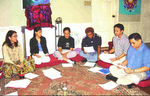
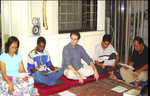
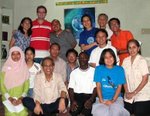
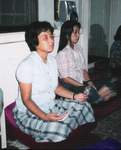
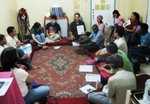
This were the guide questions reflected on at the first Inner Work Circle (TIWC) session in February held last Tuesday (Feb. 5) at the Peacemakers’ Circle. The group welcomed 2 newcomers to the circle.

After body relaxation exercises, the participants proceeded with kamustahan or touching-base with each other--sharing their highlight experiences within the past week. This was followed by a short silencing of the mind and praying for the world, before proceeding to the sharing of reflections on the theme.

The first sharing (from the most senior among the group) was about an unfailing passion for education and writing – two classic fields of endeavor through which he has creatively and unconventionally interwoven and crafted into his unique style of work as he sought to respond to the need for innovation and change in the existing social knowledge systems. Although passing through a transitional phase, he has found this to be a most purposeful path on which he will stay for the rest of his life.

On the other hand, another set of sharings heard touched on the challenges of reality and practicality vis-à-vis staying on the path of social service. Whether teaching pre-school kids or engaging in developmental work, such mission-oriented occupations are often inversely-proportional to financial stability (most especially in this country). The perpetual dilemma of “staying to serve in your beloved country versus working abroad to secure your future” came about. As pondering continues and reflections stay open ended on these personal issues one insight came out to address the fears of those concerned: “Even as details on your path change (as they are bound to), the essence of your mission can stay the same.”

Further sharing then gave emphasis to such “openness to change” and the wisdom of living in the present moment and being aware of one’s state of being (i.e. “being peaceful now”).

One participant shared how he appreciated receiving the guide question at this particular time of the year which was significant to him personally in relation to past experiences of pondering and questioning. It provided him with renewed energy and inspiration to move forward amidst doubts and difficulties clouding his path as he was reminded and made aware again that his answer/decision remains the same.

Whatever decisions we make in life, as long as we are open to whether the Higher Will is attuned to it or has other plans for us, and that we are aware of the true essence of it all, then it should turn out to be a worthwhile journey.

Next week (Feb. 12) we continue with the main theme of “Where Am I?” and our guide questions for the week are:

“How do I feel about myself being where I am? What gives me the feeling of being truly alive and well? What experience lately made me feel that way?

See you then!

OPEN EVENING: Stillness in Movement (TIWC Open Evening 01-29-08)

Infinite Peace!

Last Jan.29 was the last Tuesday of the month and so the Peacemakers’ Tuesday Inner Work Circle (TIWC) held its Open Evening session (in-house). The Peacemakers’ Circle’s very own staff member and Information & Communications Officer-- Orlan Tiu de Guzman, Jr.--was the featured speaker/facilitator for the evening.

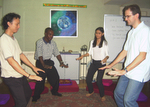
After the kamustahan and touching-base with one other by sharing each one’s highlight experiences of week, Orlan took over the session with his sharing on The Body-Mind Healing Art of T’aiChi-QiGong.

With a short introduction on the history, basic principles and how significant it is to his personal life, everyone was engaged in the actual exercises. Although this has been a regular part of the TIWC sessions as a 10-minute relaxation to prepare and silence the body, the participants eagerly engaged in the exercises which were given emphasis and more thorough instruction and demonstration. It was even relaxing enough just seeing everyone gliding slowly as they performed the meditative movements with grace and full awareness.

Introducing only five simple Qi-Gong movements, Orlan guided the participants in a way that they easily learned and memorized the exercises so that they can practice these on their own. The instructional session include hand-outs distributed for everyone.

"It was a moving experience!" exclaimed one participant (pun intended). Indeed, it was a refreshing session for everyone to not be heavily reflecting, thinking, talking, and using just the mind. For a change, it was the body that made more reflecting and “talking”. It is hoped this has reminded everyone to take time to have this regular “dialogue” between the mind and the body. For as they say: “Peace begins with the self, and peace within yourself begins when you make peace with your body.”

Next week (Feb.5) the first Tuesday of the month we begin the Inner Work reflection program 2008 with the theme: Where Am I Now? And the guide questions for the week ask: “What is my main occupation? How do I feel about what I am doing? If I had the choice, would I remain in this occupation? Why or why not?

See you then!

What am I being called to do? (TIWC 01/22/08)

Infinite Peace!

Last Jan.22 at the Peacemakers’ Tuesday Inner Work Circle (TIWC) a group of 10 gathered for a session of reflections and sharing.

Starting with kamustahan or touching-base with each other, the participants shared their highlight experiences within the past week. Some extra time were given here as we listened to an old-time peacemaker friend who came to reconnect with the circle and to “re-energize” herself by re-joining.

After a short silencing of the mind and praying for the self and the world, the circle then proceeded to the sharing of reflections on the theme: “What am I being called to do? Where am I being led to?”

There were two main kinds of responses to the topic, each from the two main generations to which the participants belong. The first batch of sharing came from the “more mature” generation whose common response to the guide question is the act of “slowing down”. Finding themselves resonating with each other’s sharing, we heard the general theme of “taking a sabbatical”, “doing less with the body and more of the spirit”, “giving less and receiving more”, “do more by sitting down and letting others (the younger ones) do more of the standing/marching around”.

On the other hand, the younger generation had a different – yet equally insightful and rich –set of responses to the same question. Although not having already established in a particular field of work nor having fully forged paths along clearly envisioned life missions, the younger minds spoke of bright hopes and fiery passion waiting to unfold and to be unleashed. This was evident from the words of wisdom they quoted as they shared their reflections:

“A single tree falling makes more noise than a whole forest growing.”

“It is not enough to stare at the stairs and know where you are going—you must step up the stairs and get there!”

Truly, wisdom it is not in the number of years or in the range of experiences, but in our ability to reflect on/ “listen to” these experiences; be aware and learn the lessons from them; and walk the talk (or even just sit the talk, eventually!) and apply what is learned at any level of existence.

Next week (Jan.29) is the last Tuesday of the month which usually means that it is time for the TIWC Open Evening for the month.

Our first Open Evening (in-house) for the year will feature “Stillness in Movement” a sharing on T’ai Chi, Qi-Gong and other Oriental Healing Arts by Orlan de Guzman, Jr.


See you then!

Reorientation to the Inner Work Program 2008 (TIWC 01/15/08)

Infinite Peace!

Last Jan. 15, 2008, the second session of the Peacemakers’ Tuesday Inner Work Circle (TIWC) for this New Year took place with the participation of 16 old and new friends.

After returning to the regular format of starting with body-silencing (through relaxation exercises led by Orlan), the group was engaged by Ms. Marites Africa into touching-base with each other through individual sharing on the highlights of each one's experiences in the past week. This once again prepared each one to connect with the others by breaking the ice and engaging the participants in the exercise of expressing one's self and listening to others.

Following the guided silencing of the mind facilitated by Ms. Marites, the group proceeded to the evening’s program which was a continuation of the reorientation to the Inner Work program 2008 of The Peacemakers’ Circle.

Ms Shakun Vaswani gave a preview to the forthcoming themes and the guide questions for the Inner Work program for the year. She explained that in each month three Tuesdays will be assigned to a particular guiding theme for reflection (for a total of 34 weekly themes for the whole year), and one Tuesday in a month will be an Open Evening session. An Open Evening is when an assigned or invited speaker has the whole session to speak about his/her particular topic/theme or subject matter (usually a particular faith tradition). An Open Evening can either be in-house conducted at The Peacemakers’ Circle, or on-site – which is when the whole group goes on a “field trip” to visit a particular place of worship and experience first-hand the faith celebrations/ religious service/lecture.

The orientation was capped off by reading aloud the Preamble, Purpose, and Principles of the United Religions Initiative (URI-PPP) whereby each one around the circle read aloud a line from the Charter one after the other.

Ms Shakun then invited everyone to become members of the Peacemakers' Circle and read out the guidelines for membership and distributed application forms.

Next Tuesday (Jan.22), as we continue discussing/finalizi ng the Inner Work program 2008, we will be sharing our reflections and insights based on the following guide questions:
1) ”Where am I led to do? What do I find myself doing best? Where am I good at?"
2) “How can I contribute in my own way/capacity to the peacebuilding programs of The Peacemakers’ Circle?”

See you then!

Welcoming the New Year with (TIWC 01/08/08)

Infinite Peace!

Last Tuesday, January 8, 2008, The Peacemakers’ Circle had its first session of the Tuesday Inner Work Circle for the new year. The 14 of us gathered in the circle eagerly exchanged kamustahan – not having seen each other for weeks since the group took a break for the holidays.

Since it was the first session of the year, the group started its session with interfaith prayers, reflections, affirmations and/or words of inspiration from each one as we offered gratitude for the previous year and welcomed the new one. It was a simple yet very solemn and powerful ceremony that jumpstarted the program in the new year with renewed inspiration and energy.

The opening silence and prayers was followed by a few words from Shakun who leveled off the knowledge of the group on The Peacemakers’ Circle as a founding “member organization” or Cooperation Circle (CC) of the United Religions Initiative (URI).

This was followed by the viewing of some short video clips from the URI which gave more visual orientation, information and understanding about the global interfaith network which The Peacemakers’ Circle is actively a part of.

The participants were then invited to renew and reaffirm their involvement in the circle by formally registering their membership (a separate email will be circulated to open the invitation and announce the mechanics of this membership).

The group then exchanged reflections and insights on what they saw in the videos and this led to a lively discussion about interfaith dialogue and “religiously motivated” violence. This fueled more passion for the participants to continue engaging in dialogue– through the circle-- to foster understanding, respect and acceptance of the differences in each other’s beliefs and perspectives. Some topics for the open evening lectures for the year where suggested.

Next Tuesday (Jan.15) we will be discussing in more detail the new format, the themes and the mechanics for the Inner Work program 2008.

See you then!

Holy Smokes!: Of swamis, fire rituals & yummy prashad (9/11/07 TIWC)

Namaste!

It was another wonderful Hindu evening for the Peacemakers’ Tuesday Inner Work Circle (TIWC) last Sept.11/07 as the group went on another Faith-On-Site session or “field trip” to attend a Vedic ritual called Maha Sudharshan Homa at a residential home in New Manila, Quezon City. The ritual --which was intended for peace, happiness and getting rid of evil forces—was especially performed by two Swamis who are devoted followers of Sri Mata Amritanandamayi Devi or “Amma”, India’s renowned “hugging Saint.”

Amma’s first monastic disciple, Swami Ramakrishnananda Puri is currently in Manila to spread the love and wisdom of the guru. A series of meditation lectures, spiritual discourses and rituals were conducted from Sept.8 to 12 in several venues in Metro Manila. The TIWC members were grateful to have had the opportunity to participate in one of these events.

It was the first time for most of us to experience a Homa or fire ritual. Although not set in an actual Hindu temple, the makeshift “shrine” – complete with a carpet platform and roofed by a tent amidst trees in a wet grassy garden of a huge cozy residential complex—was enough to provide an atmosphere of peace, serenity and sacredness for such a unique spiritual experience.

With only oil lamps lighting the area at the beginning, a clueless first-timer might find the ritual uneventful as the crowd merely observes in silence and sits in meditation (or anticipation, or amusement) as the orange-robed “priest” (who sits in full cross-legged lotus position most of the time) quietly performs a series of mudras (hand gestures) and prayers while blessing the altar with water, incense, oil lamps, twigs, flower petals and other implements.

Vedic chants sung by the Swami at certain times interspersed with the lighting of the fire. After an hour or so, the house lights were turned on and the crowd was led to a series of participatory tasks which include washing the feet and going barefoot, offering individual prayers, scattering flower petals around the fire altar, receiving and anointing ourselves with blessed water and ashes. The ritual culminated with what seemed to be the most enjoyed part of all—the distribution of prashad or food that is blessed as offering for all to share. Everyone was obviously delighted with the sweet milky prashad not only by its delicious exotic taste, but also by the experience of eating it out from our bare palms!

The evening was capped with a hearty Indian meal which was enjoyed by all while watching videos of Amma. What a delightful body-and-spirit-filling experience indeed! (It was an ideal way to conclude the 101st anniversary day of Gandhi’s non-violence movement!) Thanks to the organizers and hosts!

Om Shanti!

OrlanD

Next session we will be given a chance to share and exchange personal insights on the several events our members have experienced (Janmashtami celebration with ISKCON/Hare Krishna and the Vedic Homa with Amma's Swami). We will also be planning for the upcoming interfaith program celebration for the International Day of Peace on September 21. If there is more time we might continue with reflections on the theme: What do i have in abundance? What have i been deprived of?

See you then!

Origin & Self (August 14, 2007 TIWC)

“How do my beliefs about my origin affect my attitudes about myself?”

This was the guide question pondered on by the participants of last Tuesday (Aug.14) at the Inner Work Circle. As we reflected and shared our insights on the theme around the circle we heard stories of personal experiences and life journeys within the backdrop of each one’s respective faith tradition and spirituality.

Growing up with 13 siblings and having to share with one and all, each time every blessing (be it a whole loaf of bread, a slice of pie or a piece of apple) that is brought home by any member of the family—was how one sharer’s attitudes and values were greatly shaped by his origin. Generosity, truth, respect, and nonviolence—all these he was simply exposed to in the home as he grew up into what he is now.

Faith is also one aspect of the self that is supposed to be greatly influenced upon by one’s family- most especially the parents. Yet one sharer found himself away from his own family’s faith tradition and into another. One other sharer related his journey in and out of faith, losing God from his born-religion and finding God somewhere else.

Still, others (as the case of our Muslim brother who shared) have deeply grown rooted in their parents’ and ancestors’ faith having—found meaning and contentment in their religious lives, and never having the thought of uprooting from their origins cross their minds. Another sharer (a Catholic) also did not find it necessary to change religion even as she has opened up and explored other faiths. She realized that all religions teach the same essence anyway so there was no need for her to leave the faith she was born into—all she had to do was to adjust her perspective within the belief system and, more importantly, personalized it.

From the point of view of oriental spirituality (as shared by our Korean friend) change is most important, and it is the present moment that maters most. He pointed out that although the past (or origin) and the future (visions) are also important, neither of these actually exist. The only reality there is is the eternal now. It is in the here and now where and when we can amend the past and act for the future.

Whatever we do with this life path we found ourselves in, however we relate with the influence of our origin – whether with acceptance or with change—that is our choice. To each is his/her own journey. In fact, it is the uniqueness of each one’s journey that truly makes it special and incomparable with others’.
As pointed by another sharer: “In the end, it will just be between you and ‘your’ God.” So in a way, there are as many religions as there are people having unique relationships with God, the Infinite Source, our Supreme Origin and Ultimate Destination.

Therefore, each personal relationship with the Divine is valid and unquestionable. There lies the good news—we all come from one and the same Origin and, whether we like it or not, we are all headed towards one and the same Destination (some of us just loose our way and may take a long while to get there). It is a journey from the Infinite Divine and incarnating into the finite human existence, and then going back—through change, evolution and growth—towards realization of Wholeness and union with the Oneness of all.

Can’t wait to come full circle!

Shanti!
O.

Being Uniquely Human (Aug. 07, 2007 TIWC sharing)

Infinite Peace!

Despite the stormy weather, an intimate group of striving peacemakers braved the rains last Tuesday (Aug.7) at the Inner Work Circle to continue with their practice of self-awareness and transformation by reflecting and sharing insights on guide questions such as this one:

“What do I like about being uniquely human?”

The participants pondered on this and shared their insights from the perspective of their own faith traditions and personal experiences. We pondered on what sets us apart from other creatures and our unique nature as human beings.

Some pointed out our capability for compassion and love, while others emphasized the exceptional human intellect.

Indeed, if we are to trace the steps up the evolutionary ladder we will find us Homo Sapiens on top. We may see animals, especially fellow mammals exhibiting love and compassion, and even intelligence (remember the chimpanzees communicating with sign language?)—and yet we humans are seemingly above them all because of the degree of complexity and advancement we have evolved into.

Chimpanzees not only can communicate with sign language nowadays. I’ve heard they’re being trained to fly rocket ships into outer space! But, will you ever hear about them even dreaming about flying to the moon, let alone inventing space ships to take them there? No. Only we humans have the well-evolved cerebral cortex to do that (on Earth, that is).

Only us humans have that degree of capability and power to go beyond – to conceive of such a “beyond”, and to carve paths towards it. In fact, we humans are so intelligent we even have the ability to create inventions that can even wipe out our own species, as well as the rest of the planet! (Remember Hiroshima where 63 years ago the other day—August 6—the first atom bomb was dropped?). We have already invented a lot of things that now seem to be running beyond our control.

Good thing we have the other human faculty that help us balance our decisions—the human heart. As far as how the degree of human compassion can be best illustrated, we can cite the example of how one man sacrificed himself to be hanged in the cross—not only for the sake of one other person—but for the whole world. And there are many other human beings like him who are called saints, masters, and heroes who willfully sacrifice their lives for the larger whole.

Speaking of willful decisions, another special human attribute given emphasis during the sharing is free will (some faith traditions believe that angels and other spiritual beings don’t even have free will, unlike humans). We are given the freedom to choose whether to use our human powers to create or destroy, choose to do good or evil, to open up to knowledge or to stay ignorant.

We humans are given free will by God, the Supreme Being, the Almighty Creator, the Great Spirit—another “beyond” that only humans can conceive/ be aware of. We humans possess the consciousness not only of ourselves (self-consciousness) and others (social consciousness) but also of the higher consciousness beyond ourselves. Indeed, the ultimate edge of being human is the Spirit, and our ability to become aware or to remember that we originally are spiritual beings. We are divine sparks of light and spirit that come from the Ultimate Divine Source.

“We are spiritual beings having human experiences—not merely human beings having spiritual experiences,” they say. It is, therefore, to be fully conscious of this gift of divinity that may be our purpose as humans.

Isn’t this an exciting earthly journey we are in? This being human—a unique combination of mind, heart & light, free-willingly maneuvering a body towards growth and full awareness of the Spirit!

Next Tuesday (Aug. 14) our discussions will be based on the following reflection questions: “How do my beliefs about where I come from affect my attitude towards my self? What are these beliefs telling me about my self, and who I am?"

Shanti!
O.

What energizes you? (TIWC sharing - July 24, 2007)

Infinite Energy!

An energizing session was held last Tuesday (July 24) at the Inner Work Circle as an intimate group (sans our usual facilitators) gathered for an evening of reflective sharing and insightful conversations.

What are the things you do/eat/see/hear/experience which energize you? And what are those that drain you?

We each had our turns answering this question as we reflected on our experiences, discovered and became aware of our common answers, as well as our unique quirks.

According to the discussions, some of the things we do that energize most of us include: meditation, t’ai chi/ qi gong, dancing and being in and around nature (the beach, the moon, the green fields)-- the sight, sound, smell and the whole experience of nature. Indeed, nothing beats the undisputed number one energizer. It was even shared how one can actually cure a headache just by walking barefoot on the earth (or on the grass). Try it next time!

Music was also on top of the charts. Depending on the mood, one can get energized by soft relaxing music, or by upbeat, funky rhythm.

An all-time favorite from the ranks of food energizers is chocolate! Indeed, a common comfort food for everyone, chocolate (dark chocolate, that is) is also said to have health benefits—which include inducing endorphins or pain-relieving body-chemicals that fight depression.

Further into more experiences that keep us energized include being in the company of kindred souls or simply friends whose company uplifts your spirit. Sharing dreams, aspirations and just about anything to anyone—not just close friends—does help to unload and keep us from being drained. (And that’s partly why we were all here every Tuesday at the Inner Work—to be energize the self!).

On the other hand, some of the things that drain us include the sight, thought or experience of hopelessness, the death and dying, suffering and frustration, and injustice. We can usually identify people who can be called psychic vampires who knowingly or unknowingly suck your energies up. They are often those who are negative, pessimistic, angry and dependent people.

However and whatever drains us, the most important thing is to be aware. To be aware that we are being drained and to not allow ourselves to reach the point of “burn-out.” To be aware of what energizes us so that we can easily prevent dis-ease and loss of vitality, joy and wellness.

From now on until next Tuesday (July 31) we suggest you be mindful of your DREAMS—as this will be the topic of our next session… An Open Evening with Mr. Lucito de Jesus, dream counselor, who will share and facilitate on “The Spirituality of Dreams.” Get your dream record books ready…

See you then!

Shanti!
O.

Smell & Taste (TIWC- July 17, 2007)

Infinite Oneness!

The topic last Tuesday (July 17th) at the Inner Work circle was the Sense of Smell and Taste. It not a usual theme for reflection and sharing and it may not seem that significant but as it turned out we had a rich sharing after all.

The sense of smell and taste are indeed very connected. We were reminded how we all usually have our taste buds crippled whenever we catch a cold or we have a clogged nose. Indeed our olfactory system is needed by the tongue to perceive fully the different kinds of tastes. This is how we can also figure out by simply smelling if a new kind of food in front of us is palatable or not.

I remember learning that for snakes it’s the opposite. They say that snakes smell the surroundings (to detect preys maybe, or other creatures) through their tongue—this is why they flick their two-pronged antenna-like tongues most of the time.

Some say scents and aromas can trigger memories more strongly than the other senses. I’ve heard somewhere that the olfactory nerve is the shortest—and therefore, closest—nerve that connects to the brain. That could be the explanation.

On another note, the olfactory sense becomes a significant topic when we mention the term “pheromones”. We all know what these are for especially among animals. So how will procreation be without these? Although human pheromones have not yet been scientifically proven, we all know already the effect of perfumes and aroma when it comes to romance and “procreation”.

Speaking of aromas, another popular term nowadays is aromatherapy—which pertains to a mode of relaxation and anti-stress treatment. Indeed, the “fastfood complex” in the modern times have led us to take for granted the simple blessings like the taste of real food. Along with the lack of nutrients that go with fastfood is the attitude of “getting it over with”, or the habit of chit-chatting and even watching TV while eating—and not minding the food, the “gifts from God’s bounty.” One sharer said, “it is our turn to bless the food by being aware of it while we take it in and appreciating it as divine blessings.”

I’ve heard of a meditation exercise (Zen perhaps) wherein each participant is asked to eat one raisin for one minute. This leads one to savor the raisin fully—its taste, its texture, etc. Talk about mindfulness. That’s what we call “chewing meditation.” (We should all try it sometimes!)

There’s an expression when we are being reminded to de-stress, relax, and take rest from the daily rush of the mundane routine. We usually say: “Stop and smell the flowers.”

Now we can add to that: “Stop and taste your food”.

The last session was a bit different as we reversed the order of the regular format. We started first with the sharing on the theme and at around 7:11pm before we proceeded with meditation for about half an hour. This was so to specially connect with many other people around the world who also meditated in that same hour in conscious oneness. A world wide movement has taken this initiative to synergetically gather people to pray and meditate together all at the same time to enforce and empower what is called the grid of human consciousness for peace and healing in the world. The session ended with movement meditation through Q-Gong body-mind relaxation exercises.

Next Tuesday (July 24) our reflections will center around the following questions: What makes me feel most energetic and alive? What makes me feel tired and low (What drains me)? What are the things I like and don’t like(doing, eating, seeing, experiencing)?

Until then, let us dream, wishper, and realize for the world:
Active compassion…
Conscious oneness…
Teamwork and harmony...
Dynamic Peace…
Synergy…


Shanti!
O.

Oneness (TIWC - July 10, 2007)

Infinite Peace!

Oneness was the theme last Tuesday (July 10th) @ the Inner Work Circle and our main facilitator aptly was Mr. Ding Reyes- advocate of synergy and conscious oneness.

To start off the discussions Ding engaged the group in a creative activity to illustrate the key points. We all had papers and pencils, and we were asked to draw the object infront of us in the middle – a glass of iced water. From this exercise, the concept of oneness was expounded on…

What prevents oneness, as pointed out, is separation. What leads to separation are boundaries.

When we were asked to draw ice and clouds we automatically drew (black) lines to define the boundaries of these images (in reality, there are no lines around them-- just edges). This is how natural and automatic it is for us to create boundaries while trying to define objects, images and even concepts. This can be illustrated in many more ways, especially through those optical illusion images and puzzles. Our physical senses naturally rely on these adjustments and modifications we create in order to perceive.

This holds true with concepts or phenomenon in which we naturally need to label or categorize into words in order to define and make sense of them. Lines, words, labels are boundaries which, though maybe useful, are also what causes separation and gets in the way of oneness.

These boundaries are tools, very useful tools indeed. But like all other tools, we use these for particular tasks only and we leave them behind or set them aside while we no longer need them (unless you’re a handyman by profession—but even they need to set their tools aside while not at work!). The point is we should not all the time identify ourselves with and be fixated to these tools-- these boundaries, these words/terms, these labels and categories, these belief systems, this skin color, this body, this ego.

Much as our individual selves, our own experiences are our reality, so is the reality beyond the Self – the “others” or (a better term Ding suggests: “our fellows”).

The challenge now that we need to respond to is transcending the boundaries that limit us to our individual selves, and expanding our experiences and our realities to include our belongingness to each other, our interdependence and interconnectedness— our being part of the Bigger Self (“OurSELF”).


Next Tuesday (July 17) we will be exploring the senses we have not yet taken up: “Taste & Smell”.

What kinds of odors, scents/aromas are memorable to me? What memories do these bring back to me?
What particular food do I like and don’t like? What food will I allow myself to take? What food will I not allow myself to take?

Prepare to share your reflections on Tuesday and let’s learn more again (or be aware again) about ourselves as we strive to be the change we wish to see in the world.

See you then!

Shanti!
O.

Touching sharing (July 3, 2007)

Infinite Peace!

A touching session was held last Tuesday (July 3) at the Inner Work Circle as we touched on the theme of “The Sense of Touch.”

As we continued with the main theme of exploring the self, starting with the sight and hearing, we found yet another interesting sub-theme on the physical senses which we often take for granted and we rarely reflect on. The discussions shared last night revealed that the touch is a subject matter that is a rich source of insights. Here are some of the keywords and concepts brought up.

Touch can be positive or negative. It can be “supportive” and healing – as in massage, reflexology, physical therapy or touch therapy. Need we be reminded of the scientific study of how babies who were caressed/held by volunteers for a certain period daily were found healthier and able to resist disease more than those who left untouched?

On the other hand, touch can turn out to be negative once it is accompanied by hostile and malicious intent – as with the case of sexual harassment and abuse, or worse, physical violence.

Another concept related to touch is sensitivity (and it’s opposite, numbness). When we say a person is sensitive s/he is can easily sense either pleasant or unpleasant sensations from each touch. His/her skin may also be easily irritated.

The term “sensitive” also refers to a person who can easily feel the emotions of others or one who can easily be emotionally affected. This leads to an insight on two different levels of sensitivity and touch, that is—the physical and non-physical.

It is no wonder that the word sensitivity—which is rooted from the word “sense”—is closely associated with touch, because touch would seem to be the ultimate sensory tool in experiencing the physical world. As mentioned in the sharing, children naturally would always try to hold or touch each novel object they see. It is as if it is not enough to see or hear it-- they need to touch it to fully experience and understand it. Sometimes we need to touch something to confirm it the object is real even if we see it with our own eyes. One Christian brother reminded us of Thomas, the disciple of Christ, whose case was: “To touch is to believe”.

On the other hand, we often hear the expression “I am touched!”—which refers not to any physical contact, but to a non-physical one. This is related to the idiom: “touching one’s heart”—which leads us back to how the term “touch” relates with emotions. We “feel” sensations through our skin, as well as “feel” emotions through our hearts. Isn’t it any wonder that the touch is the ultimate expression of love?

One participant shared how she feels the love of her parents most from their touch rather than from their words or visual cues. It is when their hands and arms come in contact with, caress, pat, or embrace her body that she feels the love most.

It is no wonder also that in Chinese traditional medicine, the palm is considered an extension of the heart—as energy meridian/pathways flow from the organ out to the center of the palm (hence, our “healing hands” which instinctively reach out to the affected part of the body). It is also a healing instinct to reach out our hands and arms to anyone who got hurt, whether physically or emotionally.

The highlight of the evening was a “hands-on” activity shared by one of the participants who led us to some simple team-building exercises that demonstrated the harmonizing power of touch.

Next Tuesday (July 17) we will be taking up a suggested theme, “Terms of Oneness: ‘Ourself’ (vs. ‘Ourselves’) and “the Other’ (vs. ‘Kapwa’). This will be facilitated by Mr. Ding Reyes.

See you then!

Shanti!
O.